By The Fuel Man · Last reviewed: April 2025
Quick Answer
Putting the wrong fuel in your car causes different problems depending on which way round it happened:
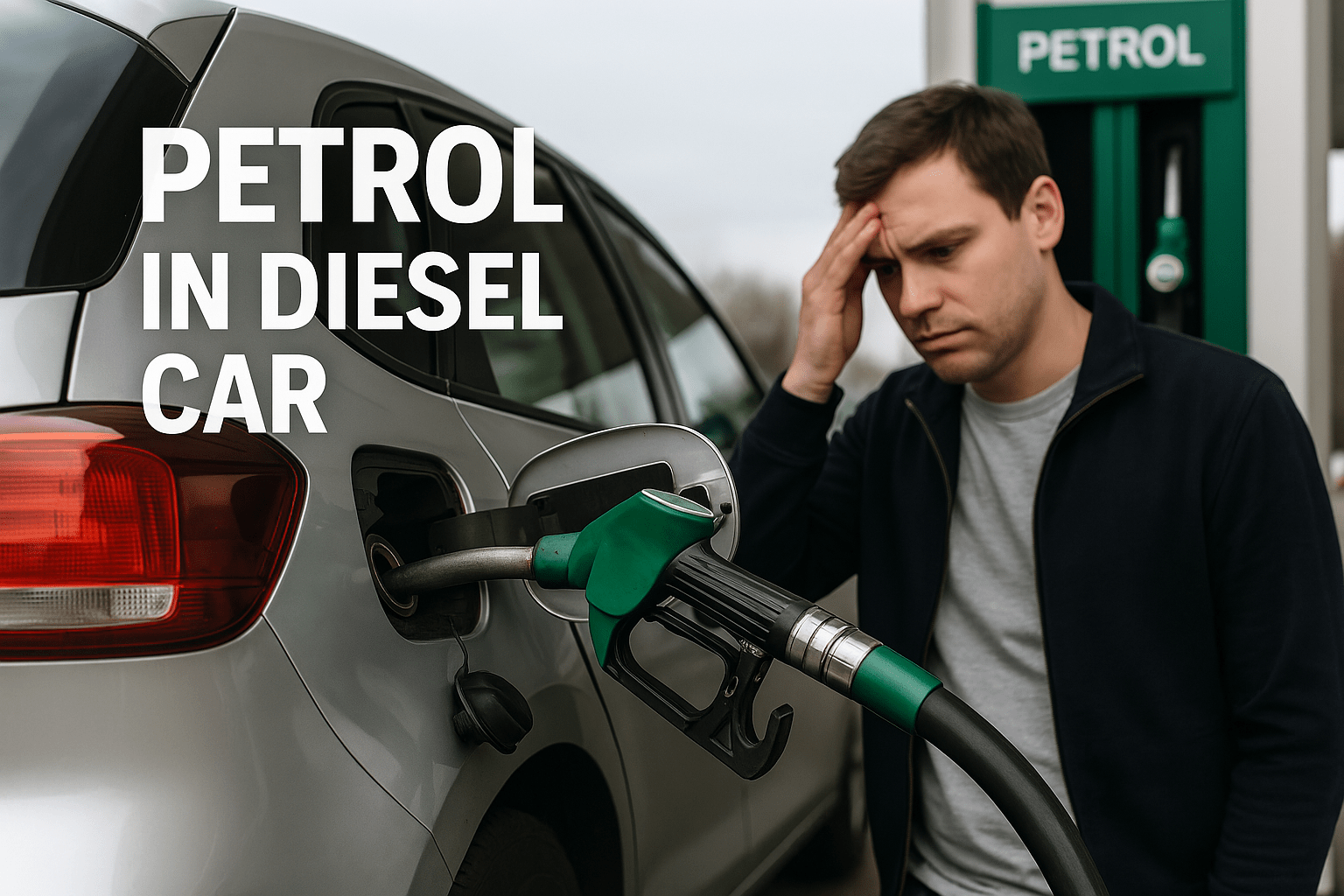
- Petrol in a diesel car — the most serious scenario. Petrol strips lubrication from the fuel pump and injectors, causing rapid mechanical wear.
- Diesel in a petrol car — less immediately damaging, but diesel clogs the fuel system and the car will usually stall or refuse to start.
In either case: do not start the engine. Call a professional wrong fuel drain service immediately. The sooner the fuel is drained, the less risk of damage.
Put the wrong fuel in right now?
We cover the whole of the UK and typically arrive within 46 minutes.
📞 Call 0333 366 1081What actually happens if you put the wrong fuel in your car?
The effects depend on which way round the misfuel happened. To understand why, it helps to know one key difference between petrol and diesel: petrol is a volatile solvent, while diesel is an oil with a relatively low ignition temperature.
Because they burn in fundamentally different ways, mixing them produces a fuel with the wrong ignition properties for either engine type — causing problems ranging from poor combustion and increased emissions, through to serious mechanical damage if driving continues.
| Scenario | Severity | Main risk |
|---|---|---|
| Petrol in diesel | High | Fuel pump and injector wear — petrol strips the lubrication diesel engines depend on |
| Diesel in petrol | Moderate | Fuel system clogging, spark plug fouling — damaging but less immediately catastrophic |
What happens when you put petrol in a diesel car?
This is the more serious and more common scenario — around 150,000 cases are reported every year in the UK. It happens because petrol nozzles are narrower than diesel fillers, making it physically possible to fill a diesel car with petrol by mistake.
The lubrication problem: Diesel fuel doesn’t just power a diesel engine — it also lubricates the high-pressure fuel pump and common rail injectors. These components are machined to extremely tight tolerances and rely entirely on the oiliness of diesel to function without wear. Petrol is a solvent. When it enters the fuel system, it strips this lubrication almost immediately.
Metal particles worn from the fuel pump then travel through the fuel lines and become lodged in the injectors, compounding the damage. Even briefly turning the engine over draws contaminated fuel through the system — which is why the single most important rule is: do not start the car.
The combustion problem: Diesel ignites under compression alone; petrol requires a spark. When petrol lowers the effective octane rating of the fuel mix in a diesel engine, ignition happens at the wrong point in the combustion cycle — causing knocking, partial burn, and increased exhaust emissions. Modern ECUs will usually detect this and put the engine into limp mode to limit damage, but this is a protection mechanism, not a guarantee — and should not be relied upon.
What happens when you put diesel in a petrol car?
This is considerably rarer, partly because diesel nozzles are larger than most petrol filler necks and often won’t fit. It tends to happen when refuelling from a jerry can or in older vehicles.
Diesel clogs rather than wears. It coats the spark plugs in an oily film, reducing their ability to fire correctly, and can foul the injectors and exhaust sensors. The car will typically stall quickly or refuse to restart once it cools — which is actually a useful safety mechanism, as it tends to limit the extent of contamination before the engine runs for long.
While the immediate risk is lower than petrol in diesel, a full drain and flush is still essential. Diluting with the correct fuel is not a reliable fix — see the partial contamination question below.
How can I tell if I’ve put the wrong fuel in my car? What are the symptoms?
If you’ve driven away from the forecourt and something feels off, the following are the most common wrong fuel symptoms. They can appear within seconds of starting the engine, or take a few minutes as the contaminated fuel works through the system.
- Loss of power — the engine enters limp mode or struggles to rev normally
- Exhaust smoke — heavy black or white smoke from the exhaust pipe
- Engine misfiring — the car jerks or kangaroos, especially under acceleration
- Difficulty starting — particularly after the engine has had a chance to cool
- Knocking sounds — unusual pinking or knocking from the engine bay
- Dashboard warning lights — check engine or fuel system warnings
Bear in mind that these symptoms can have other causes. The quickest way to confirm wrong fuel is to check your fuel receipt — most people overlook this in the panic of the moment.
How do I confirm which fuel is in my car?
- Check your fuel receipt. The easiest and most reliable method. It’s obvious but often overlooked.
- Request a VAT receipt from the petrol station. Petrol stations are legally required to keep transaction records. If you can supply the pump number and approximate time, a manager can confirm which fuel you purchased.
- Smell the fuel. Open the filler cap — diesel is heavier, oilier, and noticeably different from the sharper, more volatile smell of petrol. If unsure, compare against the filler cap of a known petrol or diesel vehicle.
- Feel the fuel. Diesel is visibly more viscous and oily to the touch; petrol feels thin and evaporates from your fingers quickly.
What should I do if I’ve put the wrong fuel in my car?
Stay calm — misfuelling is one of the most common motoring mistakes in the UK. Here’s exactly what to do:
- Do not start the engine. If you haven’t turned the key, the wrong fuel is still contained in the tank. Starting the engine — even momentarily — draws contaminated fuel into the pump and injectors and dramatically increases the risk of damage.
- If you’ve already started it, turn it off immediately. Every second the engine runs on wrong fuel increases contamination through the system. Stop as soon as it is safe to do so.
- Move the car away from the pump. Put the car in neutral and push it to a nearby parking bay. Do not attempt to drive it.
- Call a wrong fuel specialist. Contact Fuel Fixer or another dedicated wrong fuel drain service. We attend throughout the whole of the UK, typically within 46 minutes, and carry out the full drain, flush, and refill at the roadside.
- Do not try to siphon the fuel yourself. Fuel is highly flammable and petrol fumes can ignite without warning. Siphoning is also unlikely to remove enough contaminated fuel to make the car safe. Leave it to professionals with the correct safety equipment.
I only put a small amount of wrong fuel in — less than 10%. Can I just top it up with the correct fuel and drive?
You’ll hear a lot of people say this is fine for small amounts of contamination. The honest answer is: it’s a gamble, and there’s no reliable safe threshold.
In our experience attending thousands of misfuelled vehicles, we’ve seen cars break down on under 5% petrol contamination in diesel — and we’ve also seen vehicles run seemingly fine at close to 80%. The difference comes down to variables beyond anyone’s control: the age and wear of the fuel system, the quality of the individual fuels, and the specific tolerances of that engine.
Think of it like an allergy: most people can handle a small amount of the wrong thing with no serious consequence. Some can’t handle even a trace. And everyone has a limit. The cost of a professional fuel drain is a fraction of the cost of a fuel pump replacement — so the risk is rarely worth taking. Contact us and we’ll give you an honest assessment.
I drove on the wrong fuel until the car stopped. Have I ruined it?
Almost certainly not. The catastrophic damage scenarios you may have read about almost always involve one thing: a driver who noticed the symptoms and kept driving anyway, hoping to get away with it.
Modern engines are controlled by sophisticated ECUs that detect combustion problems quickly. In most cases the engine will enter limp mode or shut down before serious damage occurs. Our own data backs this up: of the 4,000+ vehicles Fuel Fixer has drained after being driven on wrong fuel, fewer than 0.25% required any garage repair at all. Those that did had been driven for extended distances after the driver became aware of the problem.
If you stopped as soon as something felt wrong, the odds are strongly in your favour. Give us a call and we’ll give you an honest assessment.
The dealership says I need to replace my entire fuel system. Is that true?
In the vast majority of cases, no — but it’s worth understanding why dealerships say this.
Dealers cannot guarantee parts that have come into contact with contaminated fuel, regardless of whether those parts have actually been damaged. Rather than risk a warranty claim later, their standard position is to recommend replacing all affected components as a precaution. This protects them commercially — and generates a significant bill for you.
We attended a customer who had put petrol into a brand-new Mercedes C-Class and moved it from the pump to a parking bay before calling us. The dealership quoted £750 to drain it and a further £9,000 to replace “damaged” components. We carried out the full drain for a fraction of that total. Two years later, the car has had no fuel system problems. You can read more in our wrong fuel FAQs.
Which type of misfuelling is the worst?
Petrol in a diesel car is by a considerable margin the more serious scenario, for two reasons:
- Lubrication: Diesel fuel systems rely on the oiliness of diesel to lubricate the fuel pump and injectors. Petrol dissolves this lubrication almost instantly, causing metal-on-metal wear that can spread through the entire fuel system.
- Physical possibility: Petrol nozzles fit into diesel filler necks, making it a common accident. Diesel nozzles are larger and typically won’t fit into a petrol car, so that scenario is far rarer.
Diesel in a petrol car still requires a professional drain and flush, but is far less likely to cause lasting mechanical damage — provided you don’t continue driving once symptoms appear.

The Fuel Man
Founder & Wrong Fuel Specialist — Fuel Fixer Ltd.
With over a decade specialising exclusively in wrong fuel incidents, The Fuel Man has personally overseen more than 50,000 misfuel callouts across the UK. Fuel Fixer holds ISO 9001 and ISO 14001 certification and is the country’s leading dedicated wrong fuel rescue service. All content on this site is drawn from direct operational experience — not theory.