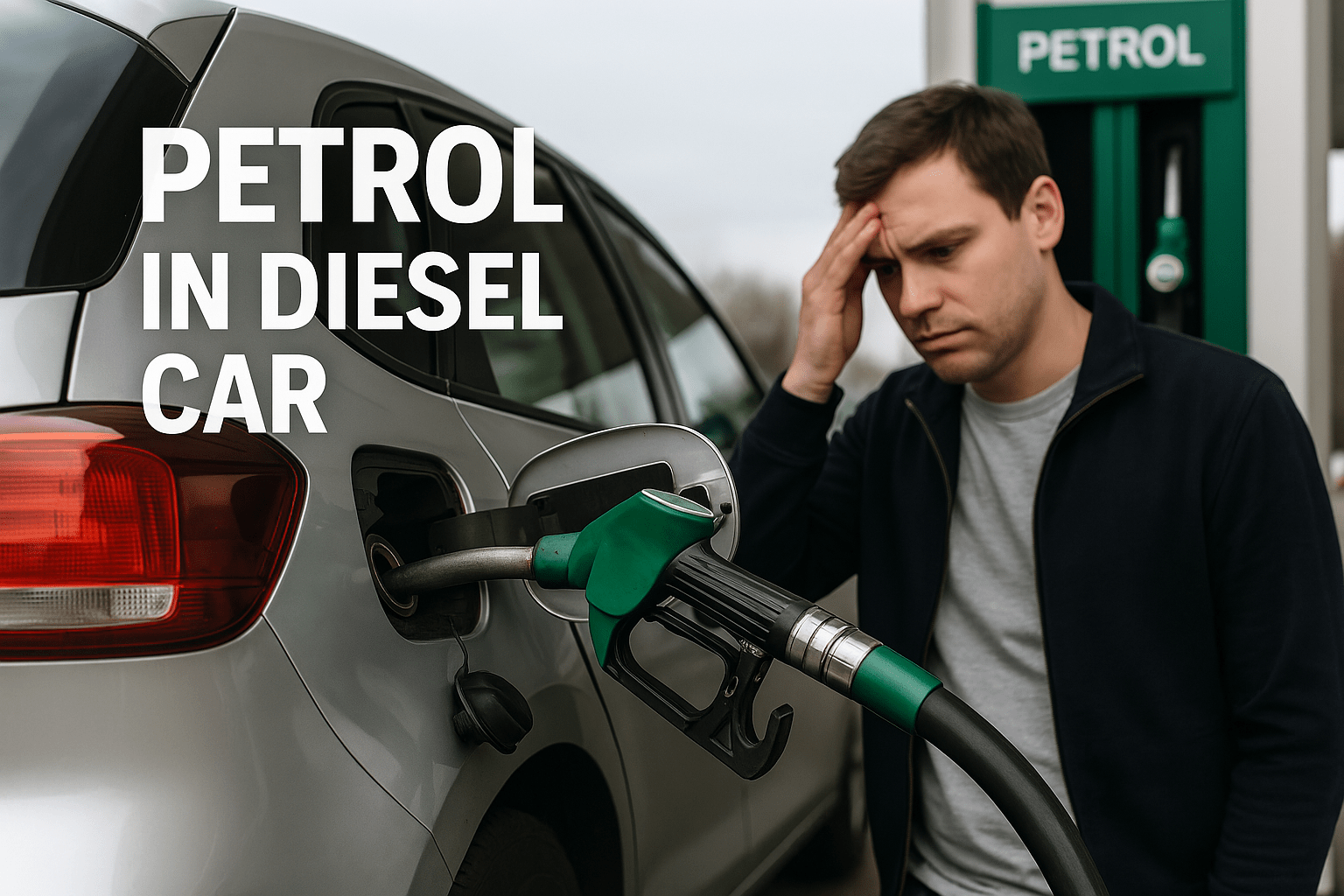
Question: I know it’s a bad thing to do – but, in reality, what happens if I put the wrong fuel in my car?
Answer: Well, I hope you have some time to kill while I explain the details of the incorrect fuel. Firstly, let’s break it down by fuel-type.
Understanding the differences between petrol and diesel will help to explain thewrong fuel problems arising when mixing them:
Petrol: any one of various volatile flammable liquid mixtures of hydrocarbons, mainly hexane, heptane, and octane, obtained from petroleum and used as a solvent and a fuel for internal-combustion engines.
Usually petrol also contains additives such as antiknock compounds and corrosion inhibitors. Also called “gasoline”. (Ref: Collins English Dictionary)
Diesel Fuel: a fuel oil obtained from petroleum distillation that is used in diesel engines.
It has a relatively low ignition temperature (540°C) and is ignited by the heat of compression. Also called “derv” or “petrodiesel”. (Ref: Collins English Dictionary)
The two major points:
To take from these definitions is that petrol is a volatile solvent – and diesel is an oil with a low ignition temperature.
Due to these major differences we can correctly assume that they burn very differently inside a modern internal-combustion engine (a fancy way of saying a car engine).
“Both diesel engines and gasoline engines covert fuel into energy through a series of small explosions or combustions. The major difference between diesel and gasoline is the way these explosions happen.
In a gasoline engine, fuel is mixed with air, compressed by pistons and ignited by sparks from spark plugs.
In a diesel engine, however, the air is compressed first, and then the fuel is injected. Because air heats up when it’s compressed, the fuel ignites.” (Ref: howstuffworks.com)
So, if we mix petrol and diesel what do we get?
Well, without getting technical, we basically get a liquid which is not as volatile as pure petrol, neither is it as “oily” as pure diesel.
It also has a completely different octane rating (octane rating is basically a measure of how much the fuel can be compressed. Before it spontaneously ignites). This means that the fuel will ignite at a different point in the combustion cycle than if it were a pure fuel.
How does this affect the individual engines?
Petrol Engine:
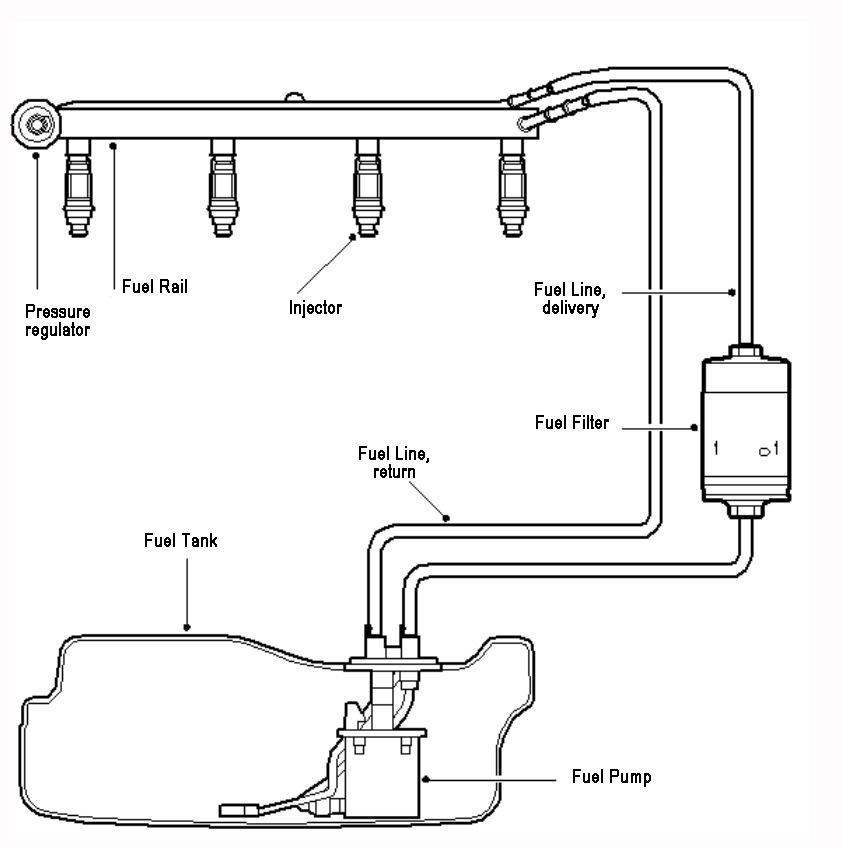
Adding diesel oil into petrol and trying to use it to fuel a petrol engine – The octane rating of the petrol will be reduced.
This can cause premature ignition of the fuel, resulting in engine “knocking” and/or “pre-ignition”.
Effects of engine knocking range from inconsequential to completely destructive. Pre-ignition can result in burnt or melted pistons.
Due to improper and inefficient combustion we often find that the fuel is not completely burnt leading to increased emissions and oil build-up on engine components.
(you’ll often find that the spark-plugs will get coated in a film of oil which will reduce their ability to spark correctly).
Exhaust sensors can also become covered in this oil. This will cause them to malfunction or even burn out completely.
So to understand of What Happens if I put the Wrong Fuel in my Car? first we need to understand how each engine works.
Diesel Engine:
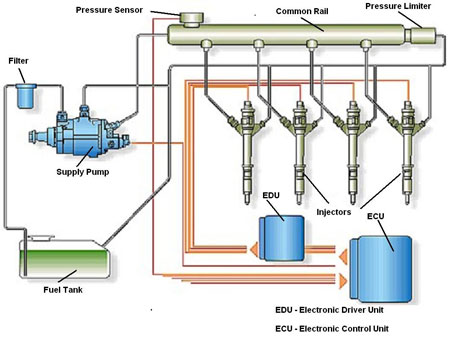
Adding petrol into diesel and trying to use it in a diesel engine – The octane rating of the diesel will be increased.
This will also affect the point at which the fuel ignites in the ignition process, resulting in partial burn, increased emissions and an increased risk to sensors.
However, in addition to changing the combustion properties of the fuel, petrol will also affect the viscosity of the diesel.
Due to the fact that petrol is a solvent it can dissolve the diesel, which makes the diesel fuel less oily.
This is more serious in a diesel engine than petrol. The reason for this that diesel fuel also acts as a lubricant for the diesel fuel system.
Basically, both the fuel tank lift-pump and the common rail high-pressure pump used in a diesel engine. Rely on the oiliness of the diesel to keep them properly lubricated and functioning.
If you remove or reduce this lubrication the pumps will start to wear and will eventually fail.
This could also have an expensive add-on effect: small metal particles worn away from the pumps (due to reduced lubrication). Can travel down the fuel lines and become lodged in the injectors, clogging them up.
On the Brighter Side:
All of the above provide very depressing reading you happen to have put the wrong fuel in your car.
However it’s not all doom and gloom – there is a brighter side: It is very rare to see an engine get to the point of damage mentioned above.
Modern engines are controlled by very sophisticated and sensitive computers in the ECU.
If you have the wrong fuel going through your fuel system the ECU will very quickly pick up that something is wrong and will, more often than not.
Shut down the system to prevent any damage (they either do this actively by putting the engine into limp mode, or passively by changing the system settings.
Based on the incorrect data acquired from affected sensors – which cause the engine to fail to run at all).
My point here is that most engines will not allow you to do massive damage to them from using the incorrect fuel-type.
The most common reason that people have damaged their vehicles with the wrong fuel is because they either ignored or failed to notice.
The clear indications that something was wrong, and continued to drive the car long after it was evident that they shouldn’t.
So, this brings us to a very important question:
Question: How can I tell if I have put the wrong fuel in my car? What are the most common wrong fuel symptoms?
Answer: Assume you’ve just been to the petrol station to fill up and, as you’re driving away, something starts nagging at you and you begin to wonder if you might have put the wrong fuel in.
Well, there are some pretty obvious signs that something could be wrong with the fuel.
These signs or symptoms include (but are not limited to):
Loss of engine power: either the engine going into limp mode, or just lacking revs.
Increased emissions: basically a lot of black or white smoke coming from the exhaust.
Engine coughing or spluttering: very easy to notice as the car will “kangaroo” while driving.
Difficulty starting: especially once the engine has had a chance to cool down.
Question: So What Happens if I put the Wrong Fuel in my Car?
Answer: Any one of these manifestations could be an indicator of “wrong fuel”. But bear in mind that there can also be other causes of these problems. So the next thing to do is to actually check the fuel.
There are a number of ways to go about this:
- Check your fuel receipt. Probably the easiest and quickest way to find out what you put in your car (I know it’s obvious but not everyone thinks of it).
- If you didn’t get a fuel receipt – or have lost it – call up or visit the petrol station. If you can remember when you filled up. (what day and time) as well as the pump you used, you can normally ask for a VAT receipt from the station. The station, by law, has to keep a record of all transactions and if you can find a helpful cashier or manager they will be able to provide you with this information.
- Smell the fuel. This will very quickly identify whether there is petrol or diesel (to the educated nose). If your nose isn’t quite so educated then find someone else who has a petrol or diesel car and smell their fuel or fuel cap, and compare it to the smell of yours.
- You can also tell the difference between petrol and diesel by feel. Diesel is very viscous and oily, while petrol is not.
- Fire test: (I do not advise doing this as petrol is highly flammable and extremely dangerous if mishandled. I only give this test for information purposes. DO NOT DO THIS.) Petrol burns openly under normal conditions – diesel doesn’t. If a mixture of fuel burns openly (i.e. at room temperature with a naked flame – like a match) it has petrol in it – simple.
So, Now what?
Having said all of the above there are a multitude of other factors that can and do affect how wrong fuel mix-ups affect vehicles.
These factors include the ratio of the two fuels (contamination percentage), age of vehicle (amount of wear and tear already extant on the fuel system), type of engine.
Quality of the individual fuels as well as the engine fuel system components, etc.
I’ve seen vehicles running well.
With almost 80% contamination. And I’ve also seen vehicles break down with as little as 3% contamination.
With all the variables in the mix, driving a car on the “wrong fuel” is a gamble – with ever increasing odds against as the contamination percentage goes higher. In fact the odds are so heavily stacked against it working out ok that the majority of modern dealerships.
will no longer guarantee their parts if they have come into contact with the wrong fuel. Yes – that means that taking a misfuelled vehicle back to most dealers will result in a bill for an entirely new fuel system.
I’ve seen Mercedes and Land Rover / Range Rover bills in excess of £15,000 just because of 10 litres of the wrong fuel.
Of course this is totally over the top and unnecessary. As I explained earlier, it is very rare to find a vehicle that has actually been damaged because of the wrong fuel.
But dealerships do not take the chance and simply replace everything – whether it’s needed or not.
So, if after all this you discover that you have put the wrong fuel in your car, give us a call for wrong fuel drain services. We know what we are talking about, and we’re happy to help.
If you need more help in What Happens if I put the Wrong Fuel in my Car?
Just give us a call and we will help you out!
Question: What If You Mistakenly Fill Your Car with the Wrong Fuel?
Answer: Whether you put petrol in a diesel automobile or the other way around, panicking is never a good idea.
Filling your car with the wrong fuel can be frustrating and costly, but it’s important not to panic. Knowing what to do in this situation can help you reduce the damage and get back on the road quickly. Here are tips on what to do if you mistakenly fill your car with the wrong fuel:
- Don’t start the engine: The engine can cause serious damage to your car, as the wrong fuel can damage the fuel pump, injectors, and other engine components. If you’ve already started the engine, it’s best to turn it off immediately.
- Don’t try to siphon the fuel: Siphoning petrol out of the tank might be risky and ineffective. The fuel can combine with the current fuel, which could further harm your car.
- Call for help: Contact a professional 24/7 fuel draining as soon as possible to help you. A professional can drain the fuel tank and flush the system with the correct fuel.
- Take preventive measures: To prevent this situation in the future, always double-check to ensure you’re putting the right fuel in your car. If you’re unsure, you can check the owner’s manual or the label on the fuel pump.
Filling your car with the wrong fuel can be costly, but if you know what to do, you can reduce the damage and get back on the road quickly. By following these tips, you can ensure your car runs smoothly and safely.
Question: Which Type of Misfuelling Is the Worst?
Answer: The most frequent and dangerous misfuelling is using petrol in a diesel vehicle.
Fuel is used as lubrication in diesel engines; however, because petrol is corrosive, it can badly harm your machine and your car’s fuel pump.
If starting your car is difficult, you might have mistakenly poured petrol into a diesel tank. A louder-than-usual engine decreased power, and a smokey exhaust is some more warning signs.
As diesel nozzles are more significant than the filler neck on most petrol cars, it happens far less frequently when diesel is inadvertently put in a petrol vehicle.
Diesel clogs the system; thus, a petrol engine misfuelling is less likely to be catastrophic, but it still needs to be fixed right immediately.
As you’re driving, exhaust smoke and a misfiring engine that may also have difficulties starting are telltale symptoms of accidentally putting diesel fuel in your petrol vehicle.
Draining and flushing the system (cleaning all polluted components and removing debris) should address the issue without more severe harm.
Nonetheless, given how flammable fuel is, it is advised that professionals handle this kind of activity with the proper safety gear.
Question: What Should I do If I Misfuel My Car?
Answer: Dont worry you are not the first person doing so, misfuelling is a very common type of mistake.
If you’ve just put petrol in a diesel car or vice versa. I’m sure that first thing you want is sound advice on what to do next.
There are a lot of opinions out there on how you should treat your vehicle after a misfueling, and to be honest, most of it is worthless.
My knowledge on the subject is a result of extensive experience dealing with misfueled vehicles.
I have spoken with many tens of thousands of motorists who have put petrol into their diesel vehicles
Few thousand who have put diesel into petrol.
Additionally, as a company we have completed fuel drains on many, many thousands of misfueled vehicles.
This is our business and is pretty much the only thing we do – therefore we are professional specialists on the subject.
With all that in mind, I’m going to give you some advice on what to do and what the common untruths are.
Question: I’ve filled up my car with petrol instead of diesel and drove it until it conked out. Have I ruined it?
Answer: It is very unlikely that you have ruined your car by misfueling and driving it.
That said it’s not unheard of for a pump to fail, or an injector to get clogged.
But, statistically speaking, of the more than 4,000 fuel drains we have done so far this year on run misfueled vehicles.
Less than 10 had sustained damaged necessitating a visit to a garage for repair (less than 0.25%).
In the cases of damage the vehicles had generally been run continuously, long after the misfuel was known about, and the customers had tried to just “get away with it”.
Question: I’ve misfueled my vehicle and the dealership has told me I need to replace almost the entire fuel system. Is this true?
Answer: No.
Question: Well, if it’s not true why do people say it?
Answer: The answer to that is very simple – money. If you put petrol into your diesel car you basically misfuelled, for example.
Take it in to the dealership you would likely be faced with a bill to the tune of thousands of pounds.
Mercedes will say that because there is a possibility that some parts have become damaged (regardless of how remote that possibility is).
They are no longer able to guarantee those parts.
Therefore, in order for them to be able to maintain your warranty and continue to guarantee your engine parts they will need to replace them.
Not only does this protect them from an unsatisfied customer suing when their engine fails it also makes them a tidy little sum of money.
A few months ago someone misfuelled a brand new Mercedes C Class.
The customer had put petrol into it and then moved it from the pump to a parking bay at the petrol station.
It was then recovered to the dealership and he was given a bill for £750 to drain the fuel out and £9,000 to replace the “damaged” engine parts.
We attended the vehicle, drained it and cleaned it out for the customer for a tiny fraction of that amount.
I spoke with the customer recently and he has had absolutely no problems with the vehicle at all.
So, did he really need to have everything replaced? I leave that for you to decide.
Want more information regarding wrong fuel in car?
Question: I’ve only put a little petrol into the diesel tank, less than 10% of the fuel tank’s capacity. Can I just top it up with the correct fuel?
Answer: You hear a lot of this going around. And you also hear a lot of conflicting stories and opinions on its validity, of misfuelling.
What is actually gasoline?
There are probably as many correct answers to this as there are cars in the world.
I’ve heard of people having a 10% contamination problem and filling the vehicle up and never experiencing a problem at all.
I’ve also been called out to help stranded motorists who put less than 5% petrol in their diesel and the vehicle conked out.
I think I can best explain it with an analogy: Liken misfueling to putting drugs into the body.
Pretty much everyone reacts differently to drugs. Some can have a little with no serious adverse effects.
Some can’t handle even the smallest amounts. Anyone will die if you give them too much.
So, when deciding whether to “fill it up and give it a go”, just realise that it’s a gamble. How lucky do you feel?
So you misfuelled, so what there is solution to it. Your car won’t break, we can fix that!
If you are still unsure of what to do after putting petrol into your diesel car, give us a call. We’d be glad to help.
If you looking for more information regarding wrong fuel Contact us and we will help you out.
In Short…
Understanding the effects of using the incorrect fuel in your vehicle and what to do in the event of an error is crucial. Calling the wrong fuel service is the wisest action if you find yourself in this predicament. These businesses employ qualified personnel who can safely remove the incorrect fuel from your car and refill it with the correct fuel. The safest and most effective approach to restarting your car is to do it this way. Knowing what to do in the event of a wrong petrol mistake can be crucial to prevent more harm to your car and your finances.
Did you put the wrong fuel in the vehicle? Call Fuel Fixers for the best wrong fuel service, as we typically arrive in 46 minutes. Call us, stay safe, and we’ll fix your car while you wait.