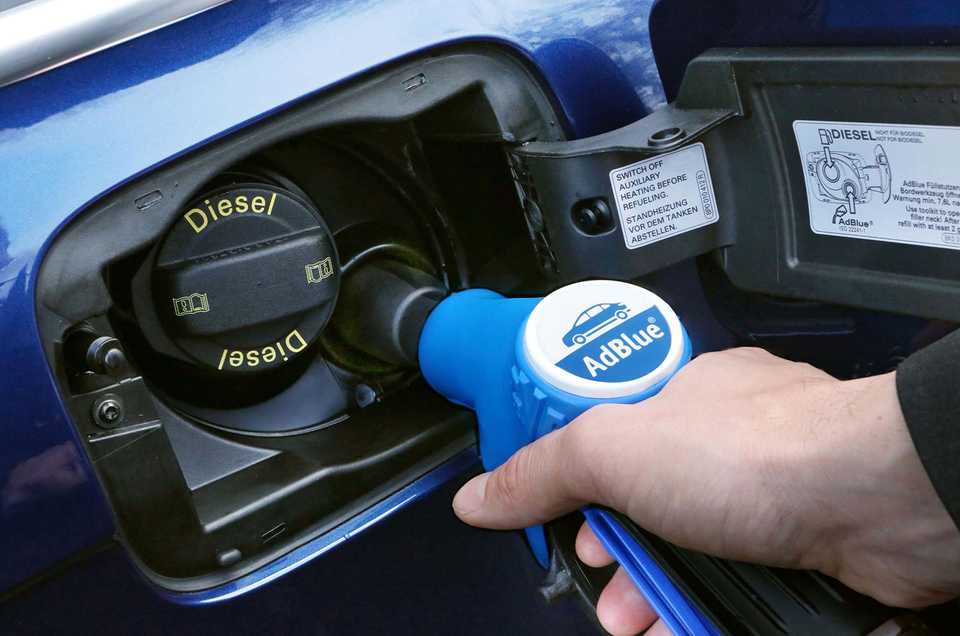
What Is AdBlue?
In finding out what to do if you put AdBlue in a diesel tank, first you need to understand what AdBlue is: AdBlue is a urea-based liquid diesel exhaust fluid (DEF) used in motor vehicles with Selective Catalytic Reduction (SCR) technology to reduce harmful emissions. It is an aqueous solution of urea and deionized water, and is used to reduce emissions of nitrogen oxide (NOx) from diesel exhaust.
AdBlue is injected into the exhaust system of diesel-powered vehicles, where it reacts with the nitrogen oxide (NOx) present in the exhaust gases. This reaction creates harmless nitrogen and water vapour, which are then released into the atmosphere. By reducing the amount of NOx released into the atmosphere, AdBlue helps to reduce air pollution and improve air quality.
AdBlue is neither a fuel nor a fuel additive for the main diesel fuel tank, and it is meant to be stored in a separate reservoir on the vehicle. The main issue arises when drivers mistakenly add AdBlue directly to their diesel tank, either by misreading labels or assuming it to be an additive for the diesel fuel.
It is crucial to note that AdBlue should never be introduced into a diesel fuel tank.

What to Do If You Accidentally Put AdBlue in a Diesel Tank
AdBlue is a diesel exhaust fluid that is used in modern diesel vehicles to reduce emissions. It is a mixture of water and urea and is injected into the exhaust system to break down harmful nitrogen oxides (NOx) into harmless nitrogen and water. However, what happens if you accidentally put AdBlue in a diesel tank? In this article, we will discuss what to do if this situation arises.
Adding AdBlue to a diesel tank is an unfortunate mistake that can result in serious consequences for your vehicle. AdBlue is an additive used to reduce emissions from diesel engines, and although it plays a vital role in ensuring your vehicle operates in an environmentally friendly way, it can cause significant damage if inadvertently added to a diesel tank.
Stop Driving the Vehicle
The first thing to do if you accidentally put AdBlue in a diesel tank is to stop driving the vehicle immediately. This is because AdBlue is not designed to be used as fuel and can cause serious damage to the engine if it is used in this way.
Stopping the vehicle immediately helps to limit the amount of damage that can be done to your engine, as well as prevent further contamination of the fuel system. Continuing to drive can lead to expensive repairs and even engine failure.
Do Not Start the Engine
Once you have stopped the vehicle, do not start the engine. Starting the engine will circulate the AdBlue throughout the fuel system, making the problem worse and increasing the likelihood of serious damage.
When AdBlue is mistakenly added to a diesel tank, it can wreak havoc on the engine, fuel system, and fuel pump. AdBlue is highly corrosive, which can lead to lasting damage to the vehicle’s components and result in expensive repairs and significant downtime.
Contact a Professional
The next step is to contact a professional. Call your breakdown recovery service or a qualified mechanic who can come to your location and assess the damage. They will be able to advise you on the best course of action and safely remove the AdBlue from the fuel system.
When faced with an AdBlue misfuelling mishap, Fuel Fixer’s misfuel specialists can effectively diagnose and address the issue, ensuring a swift recovery and a return to the road.
Drain the Tank
If the AdBlue has only been added to a small amount of diesel, it may be possible to drain the tank and remove the AdBlue before it causes damage. However, if the AdBlue has been added to a significant amount of diesel, the tank may need to be completely drained and cleaned before it can be refilled.
Once the vehicle has been stopped, draining the fuel tank and replacing the fuel filter is necessary to ensure that any remaining AdBlue is removed from the fuel system.
Flush the Fuel System
Once the tank has been drained, it is important to flush the fuel system to remove any remaining AdBlue. This involves running clean diesel through the system to flush out contamination.
This process may need to be repeated several times to ensure that all traces of AdBlue have been completely removed and that the engine is not damaged further.
Replace the Fuel Filter
It is likely that AdBlue will have passed through the fuel filter, so replacing the filter after flushing the system is essential. This helps ensure that any remaining traces of contamination are removed before the vehicle is returned to service.
Refill the Tank with Diesel
Once the fuel system has been flushed and the fuel filter replaced, the tank can be refilled with diesel. It is important to ensure that the correct type of diesel is used, as some vehicles require a specific formulation to work properly with the engine.
Finally, Have the Vehicle Inspected
Finally, the vehicle should be inspected by a qualified mechanic to ensure that all components of the fuel system are in working order. This helps confirm that any damage caused by the AdBlue has been addressed and that the engine is running correctly.
The Dangers of AdBlue in Diesel Tanks
Despite the clear separation between Adblue and diesel fuel, mistakes can happen. If Adblue is accidentally introduced into a diesel tank, it can cause the following complications to your vehicle:
- Fuel pump damage: Since Adblue is highly corrosive, it can quickly damage the fuel pump, leading to expensive repairs or even replacement of the pump.
- Engine damage: When Adblue interacts with diesel fuel, it can create a dangerous mixture that may harm the engine’s internal parts and compromise its performance.
- Fuel system blockages: The mixture of Adblue and diesel may form solid particles or deposits that can clog your vehicle’s fuel lines and filters, strangling the flow of fuel to the engine.
- Expensive repairs: The longer the Adblue stays in the diesel tank, the more damage it causes, leading to potentially costly repairs or even the replacement of engine components.
Given these consequences, it is vital to act swiftly and seek professional help if Adblue has been mistakenly added to your diesel tank.
Fuel Fixer to the Rescue: How We Can Help
When faced with an Adblue misfuelling mishap, Fuel Fixer’s expert team is well-equipped to resolve the issue and mitigate potential damage. Our misfuel specialists follow a systematic process to assess, drain, and clean the affected vehicle:
- Comprehensive vehicle assessment: Upon arrival, our team of experts evaluates the extent of the misfuelling, gauging the potential damage to the fuel system and engine.
- Draining the fuel tank: Using advanced equipment, our qualified technicians will carefully and thoroughly drain the contaminated fuel from the vehicle’s tank, ensuring no traces of the Adblue-diesel mixture remain.
- Fuel system cleansing: With the tank emptied, our team proceeds to flush and cleanse the fuel system, eradicating any residue that could compromise the vehicle’s performance.
- Correct fuel introduction and testing: The vehicle’s tank is then refilled with the appropriate diesel fuel, following which our experts test the car to ensure that it is running optimally and free of any issues.
Throughout this process, our Fuel Fixer misfuel specialists remain vigilant about safety protocols and employ industry best practices, ensuring that your vehicle is in good hands and on the path to recovery.
Prevention Strategies: Tips to Avoid Accidental Adblue Introduction
By exercising caution and following a few practical tips, drivers can significantly reduce the risk of accidentally putting AdBlue in their diesel tanks:
- Familiarise yourself with your vehicle: Always remember that Adblue goes into a separate reservoir, not the diesel tank. Ensure you understand the location and functioning of the Adblue system in your vehicle.
- Read labels and instructions carefully: Take a moment to read the instructions provided on the Adblue container and at filling stations to avoid misunderstandings and accidents.
- Practice mindfulness at the pump: Distractions are among the primary reasons for misfuelling. Paying attention to your actions while refilling your vehicle can help avert such mishaps.
Remember, prevention is always better than the cure, and practising vigilance while refuelling your vehicle can go a long way towards avoiding costly errors.
While putting AdBlue in a diesel tank can be a frustrating mistake, it is not a catastrophic one. With the right steps taken promptly, you can avoid extensive damage to your diesel engine and get back on the road as soon as possible.
Remember to contact a professional, drain the tank, flush the fuel system, replace the fuel filter, and refill the tank with diesel.
If you’ve accidentally put the wrong fuel in your car, don’t panic. Fuel Fixer offers mobile units across the UK to help with misfuelling issues, operating 24/7 to get you back on the road as quickly and safely as possible.