AdBlue in your fuel tank by mistake?
We’ll get you back on the road — fast.
Talk to our expert & get a quote
Tell us the vehicle and what’s happened — we’ll give you a price and get a mobile unit to you fast. Friendly advice even if you don’t book.
Call Now0333 366 1243- No call-out surprises, no tow & no garage bills
- VAT invoice & engine report provided
AdBlue in your fuel tank? Here’s what to do
AdBlue is NOT a fuel additive and should never be mixed into your fuel tank – petrol or diesel. It needs to go into its own separate filler (usually with a blue filler cap). If you’ve mistakenly put AdBlue into the fuel tank it’s important to get it removed quickly, or serious engine damage can occur. It’s not an easy DIY job – but our mobile units can get to you quickly and fix the problem.
What happens if you put AdBlue in your fuel tank?
AdBlue is not a fuel additive. It’s about one-third urea (acidic) and two-thirds deionised water. In your fuel system that acidic solution corrodes seals, fuel lines and injectors, and it crystallises — clogging filters and injectors. Fuel filters that have had AdBlue through them break down like wet cardboard. The longer it stays in, the more damage it does, and starting the engine makes it worse.
What should you do if you put AdBlue in your fuel tank?
1. Don’t start the car (or pull over and switch off as soon as it’s safe). 2. Put your hazard lights on and keep everyone safe. 3. Call Fuel Fixer on 0333 366 1243. A mobile unit reaches you in about 46 minutes and drains it on the spot — roadside, forecourt or at home. The drain, reset and restart takes about 30 minutes, then you’re good to go.
Mobile unit available near you now
Avg. arrival time 46 mins. We fix it while you wait – roadside, forecourt or home.
Symptoms of AdBlue in fuel
- Car refuses to start after refuelling
- Loss of engine power after refuelling
- Engine runs poorly after refuelling
- Car won’t start when the engine has cooled
- White smoke in exhaust after filling up
- Dashboard warning light after refuelling
What does AdBlue in fuel do to my engine?
AdBlue is a liquid that helps remove nitrous oxide – a poisonous gas – from your car’s exhaust. It’s used to clean exhaust fumes; it is definitely not a fuel additive. It mostly consists of ionised water and also contains urea, which is corrosive to fuel-system pipes and seals.
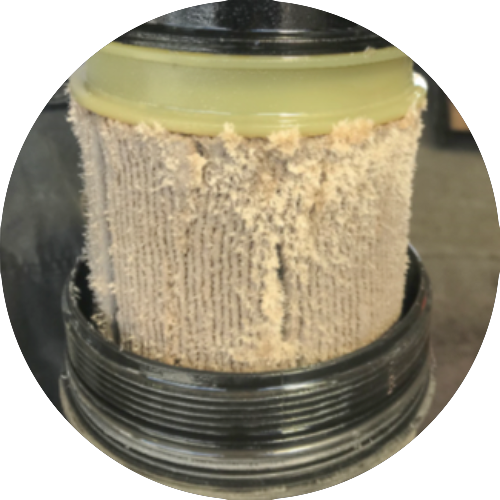
Furthermore it is prone to crystallisation, clogging injectors and fuel filters – like the picture below. It will do expensive damage if not removed. But provided you act quickly, it will be fine. We fix it on the spot so you can drive on without concern.
How we fix it
We bring specialist equipment to remove the wrong fuel safely – including flushing your fuel lines, filters, pumps and engine. The procedure to drain the wrong fuel, then re-set and re-start your car, takes about 30 minutes. Then you’re good to go.
We’ll give you fresh fuel so you can drive on. Once done, your car will be just fine. Our mobile mechanic will be with you soon after you call.
- The biggest wrong-fuel specialists, country-wide coverage
- 5-star ratings on Google, Trustpilot & Reviews.io

From your call to back on the road
- 10 minYou speak to our expertTell us the vehicle and what’s happened. We give you advice and a quote, then dispatch the nearest mobile unit.
- 2~46 minA mobile unit reaches youRoadside, on a forecourt or at home — our national average response time is just 46 minutes. No towing.
- 3~30 minWe drain, flush & resetWe safely remove the contaminated fuel and flush the lines, filters and pumps, then reset and re-start your car.
- 4Drive awayFresh fuel in — you’re goneWe add fresh fuel so you can drive on, hand you a VAT invoice and engine report, and you’re back on your journey.
Put AdBlue in the tank and driven it?
Your car might go a short distance, depending on how much AdBlue has been put in. But as the contaminated fuel goes through the system it will do damage – it needs to be fully removed. There’s really no safe amount of AdBlue in petrol or diesel. If you’re not sure, call our hotline for sensible advice.
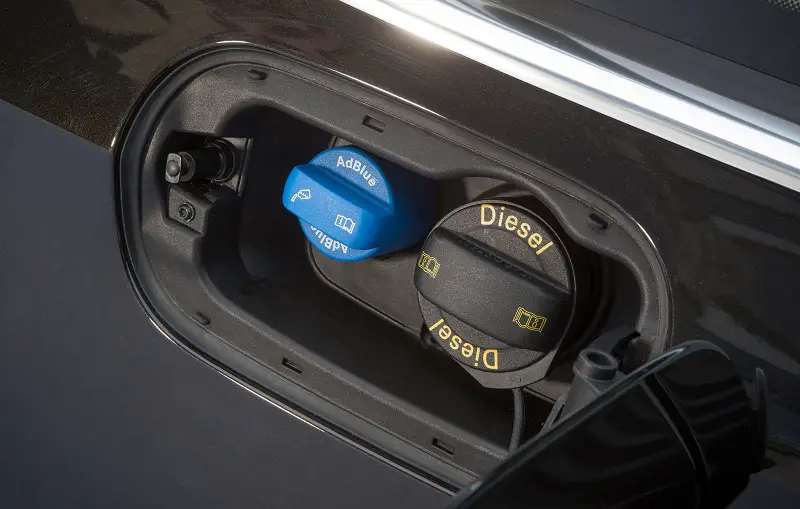
It’s very easy to pour AdBlue into the wrong filler without realising it – the fillers are usually right next to each other. Over 300,000 motorists a year in the UK put the wrong fuel in their car. If your car won’t start, or runs poorly after you added some AdBlue, call us and we’ll help you work it out.
Why choose Fuel Fixer?
Several companies now offer fuel-draining services, including reputable businesses such as the AA and Fuel Doctor. Unfortunately there are also less trustworthy companies without the equipment and training for a proper job. We have over 15 years’ experience and lead the field in service and technical expertise.
In the unlikely event you experience a problem after we finish, you’ll have our hotline number for further advice and help. Once our mechanic finishes the draining he’ll do a re-set and re-start procedure – after putting in some of the right fuel. He may also advise a special additive at your next refuel for extra engine protection.
- Full after-service support and advice hotline
- Lines open 6:00am till 10:00pm, all days
- Detailed reports and VAT invoices provided

What’s included with every callout
- Full fuel-system drain — tank, lines, filters, pumps & engine flushed
- Reset and re-start, with fresh fuel so you can drive on
- Detailed VAT invoice & engine report — useful for insurance claims
- Aftercare advice and an optional engine-protection additive
- Free advice hotline after the job
- No call-out surprises, no towing, no garage, no recovery bills
Vehicles we cover
We rescue individual motorists and commercial operators alike — including insurance, recovery and main-dealer contracts.
Not sure we cover yours? Call 0333 366 1243 and ask — we almost certainly do.
Why not just go to a garage?
Most garages don’t keep the specialist equipment needed to fully drain a modern fuel system — so they often call us anyway. Some main dealers treat a misfuel as a windfall and replace expensive components unnecessarily; we’ve heard of bills quoted up to £10,000 on cars that hadn’t even been started. A proper roadside drain costs a tiny fraction of that, and you drive away the same day.
Frequently asked questions
I put AdBlue into the diesel tank by mistake. Will it cause damage?
Yes. It can happen very easily because the fillers are usually next to each other, and many people wrongly believe AdBlue is a fuel additive. It isn’t.
AdBlue is one-third urea (acidic) and two-thirds deionised water. That acid solution gets passed through your engine along with the fuel – with predictable results. Starting the engine makes the problem worse.
It’s also prone to crystallisation, clogging injectors and fuel filters. Fuel filters that have had AdBlue put through them decompose and fall apart, like cardboard soaked in water – and it happens quite fast. The acidic urea and paper particles clog and attack seals, fuel lines and injectors. It needs to be removed quickly, preferably before the engine is turned on.
Have I damaged my car?
Provided you act quickly, you’re very unlikely to suffer any serious damage. In the great majority of cases the car is up and running again as soon as we’ve drained the wrong fuel from the system.
It’s best if you haven’t started the car – that means virtually no chance of damage. Even if you have started it, and maybe driven a little before noticing, the chance of lasting damage is slim. If you got home but the car then wouldn’t restart, you’ll still be fine – but get the wrong fuel removed as soon as you can.
The longer the wrong fuel remains in your tank, fuel lines and engine, the more damage it does: it gradually corrodes rubber and plastic seals and tubes, and dissolves lubricating fluids. Petrol cars need petrol and diesel cars need diesel – anything else invites problems.
I drove a couple of miles after filling my diesel car with petrol. Have I done any damage?
The small amount of unmixed diesel in your fuel lines, plus the slightly mixed fuel in the tank, can carry you a short distance. But once petrol travels through the low-pressure pump, the fuel lines, the filter, the high-pressure pump, the common rail and finally into the combustion chamber – that’s normally the exact point the engine stops. Petrol in a diesel system removes lubricants and corrodes seals.
Because you likely want to finish your journey and keep using your car, the wrong fuel needs to be removed fully. In the old days you could siphon petrol out with a length of hosepipe, but modern fuel-tank designs make this unfeasible – it takes specialist equipment and expertise to do properly now.
What does petrol do to a diesel engine?
Petrol removes the oily lubrication diesel provides and corrodes rubber and plastic components. Hoses used to empty heavily-misfueled diesel tanks tell the story: drained within an hour, the hose stays clear; left for a day, the hose shows black fluid as rubber from hoses and seals dissolves in the petrol.
What happens to the mixed petrol/diesel removed from the vehicle?
An Environment Agency licence is required to transport and store the mixed fuel we remove. It’s securely and safely stored, then ultimately re-refined and returned to the fuel supply chain.
What’s worse: petrol in a diesel car or diesel in a petrol car?
Both are bad news. In the short term petrol in a diesel usually stalls the engine, or runs with reduced power; diesel in a petrol car loses power and runs flat.
Worst cases: petrol in a diesel can eventually damage the high-pressure pump and injectors through lack of lubrication (metal grinding on metal at very high pressure), then cylinder linings. Diesel in a petrol engine can slide past the piston rings into the oil sump, raising oil level and thinning lubrication, risking serious engine failure. Both extremes are rare and need a lot of driving to reach – but the cost of removing the wrong fuel is tiny by comparison.
My main dealer says it must be repaired in an official garage, costing up to £10,000. Is that needed?
Usually not. Some dealers and garages treat misfuels as a windfall – we’ve heard of unstarted cars (with only £20 of wrong fuel added) collected from forecourts and given expensive, unnecessary component replacements. Most garages don’t keep the specialist draining equipment we use and find it simpler to call us.
Why don’t I just fill up with the right fuel and let the wrong fuel work its way out?
It’s not recommended, though you can try with only a small amount of wrong fuel in a full tank. The engine tends to run poorly, you may trigger dashboard lights that need clearing at a garage, and it may not restart when cold. You risk corroding hoses and seals and damaging fuel pumps – all expensive to fix. Diluting is a gamble; calling us to fix it fully is usually the best and cheapest option.
Are there a lot of people who do this?
You’re really not alone – the best estimates suggest over 300,000 people a year in the UK put the wrong fuel in their car. The pumps look similar, you’re distracted, you’re in a rush. We’ll deal with your problem quickly and let you put it in the rear-view mirror.
Does petrol float on top of diesel, or the other way round?
Neither. They blend very rapidly in the tank into a fairly even mixture. Both come from crude oil; only refining separates them, and once recombined they mix and stay together until re-refined.
Didn’t lorry drivers once put a little petrol in their diesel tanks for cold climates?
Yes, until about the 1970s, as an ad-hoc winter additive in freezing areas. But diesel engines then were low-tech compared with today’s high-pressure systems. Winter Fuel Additive is now added to diesel by refiners from around September, so there’s no need for old home remedies.
My engine management light has come on. What does that mean?
The light can signal many things. The wrong fuel throws off the engine’s measurements (air/fuel flow, pressures, timing) and often triggers a fault code that may or may not be accurate. The vast majority of wrong-fuel fault codes are temporary and switch off once the engine is getting the right fuel. It’s very rare for a light to stay on after a drain and restart.
Do I need to get a new fuel filter?
Usually no. Petrol and diesel don’t “sit” in or “condense” inside a filter. During a fuel drain the filter is flushed by pumping the correct fuel through it. A replacement filter costs only a few pounds and takes 6–8 minutes – be wary of inflated bills for it.
Can’t I just syphon the wrong fuel out with a hosepipe?
On cars older than about 30 years, maybe – if you don’t mind the taste of diesel for a week. But modern cars have anti-siphon devices and saddle-shaped, baffled tanks a hosepipe can’t reach. There’s also the problem of disposing of the mixed fuel legally – we collect it in approved storage and return it to the refinery.
What if my fuel is contaminated with something else, like water?
The symptoms are similar – wrong fuel is really just a type of contamination. The cure is the same: fully drain the contaminated fuel from the tank, fuel lines and engine, do any engine-management reset needed, and fill with the correct fuel. We deal with all of these daily.
How can I avoid putting the wrong fuel in my car?
Check the fuel cap before you fill up – it tells you exactly what fuel the vehicle takes.
What are the signs that I’ve put the wrong fuel in my tank?
A few signs to look for: the vehicle may not start; you may hear spluttering or it may stall; you may see black smoke from the exhaust; the car may overheat; or it may lose power.
What is the difference between diesel fuel and petrol?
Diesel is a fuel oil used in diesel engines; petrol is used in petrol engines. Diesel is thicker and has a higher cetane rating (a measure of ignition quality), igniting more easily under compression – which is why it’s used in diesel engines.
Other services




Blocked diesel particulate filter? Our sister company can clean it at home, roadside or work. Find out more →

Fuel Fixer: the national fuel drain service
Fuel Fixer provides a nationwide, rapid-response wrong-fuel drain recovery service. If you’ve accidentally filled up with the incorrect fuel we’ll get you up and running with no mess and no fuss. Whether you’re stuck on a forecourt or at the roadside we can get someone out to you quickly – our national average response time is only 46 minutes.

DPF problem? Try our sister DPF service
If your diesel particulate filter is blocked or full (usually shown by a dashboard warning light) our sister company DPF-FIXER can help. They carry out a full clean of your DPF at home, roadside or at work – restoring normal power and efficiency without the expense of a new DPF unit. Find out more here.
Rated 5 stars on Google, Trustpilot & Reviews.io
Over 250,000 motorists rescued, 98.3% of booked jobs completed successfully, and an average arrival time of just 46 minutes. ISO 9001 & 14001 certified and Environment Agency accredited.